
Understanding the Key Components of an Anesthesia Machine
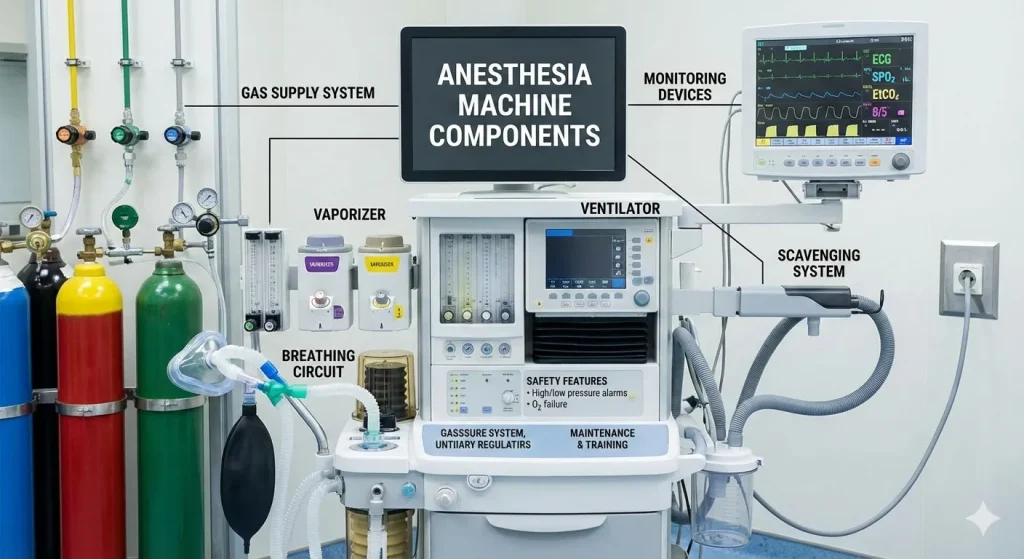
In the medical field, anesthesia machines play a crucial role in performing procedures by ensuring patient comfort and appropriate security. These sophisticated machines deliver precise amounts of anesthetic gases to maintain the delicate balance of general anesthesia. This article will outline the key reasons why these machines are essential in all medical facilities.
Gas Supply System
You need to select a high-performance anesthesia machine designed for precision and reliability during surgical procedures. The primary function of an anesthesia machine is to deliver gases, such as oxygen and nitrous oxide. These types of gas are either supplied directly from a pipeline or are stored in cylinders. Pressure regulators provide gases that meet the required pressure levels for safe transportation and handling. Flow meters then measure and regulate the volume of gas supplied to the patient, which can then be adjusted according to individual needs.
Vaporizer
A vaporizer is a device that vaporizes liquid anesthetic agents. This vapor is combined with a gas to achieve the ideal concentration. They are not interchangeable; each vaporizer is specifically designed for a particular agent. It is vital to ensure the calibration maintains the desired concentration; otherwise, even a slight change in the concentration can compromise patient safety. The vaporizer needs to be kept and checked regularly for it to work optimally.
Breathing Circuit
The breathing circuit is the part of the anesthesia machine that relates to the patient. It is composed of multiple parts, including hoses, valves, and a reservoir bag. The circuit ensures a designated area for delivering anesthetic gases and discharging exhaled air. Unidirectional valves allow the inhalation of only fresh gas, preventing the rebreathing of carbon dioxide. A reservoir bag gives you extra gas to work with if you need to ventilate them.
Ventilator
The ventilator provides mechanical ventilation, which is assisted or controlled, or a combination that supports or replaces spontaneous breathing. It controls the flow of gas given to the patient, ensuring they are oxygenated and that carbon dioxide is removed. Today’s ventilators have a range of modes used to support patients. Many alarms and monitoring systems trigger alerts that notify medical personnel of any changes or problems, allowing them to intervene directly and promptly when needed.
Scavenging System
Anesthesia machines have a scavenging system that removes used gas. The scavenging system includes a mechanism that eliminates waste anesthetic gases and disposes of them, ensuring the operating room is free of them. The scavenging system must be working correctly to ensure the safety of both medical staff and patients. Regular inspections and temporary maintenance ensure the system remains operational.
Monitoring Devices
These monitoring devices observe vital signs, levels of anesthesia (the type cited in the previous story), the flow of breath into the body, and other parameters in nearly real-time. These gadgets keep track of heart rate, blood pressure, oxygen saturation, and carbon dioxide levels. This constant vigilance enables medical personnel to make informed decisions, ensuring the safety of every patient throughout the process. They may also have sophisticated monitoring capabilities that identify potential complications and alert staff, allowing for rapid response to emerging adverse events.
Safety Features
Anesthesia machines come furnished with functional safety features. It includes a high-pressure alarm, a low-pressure alarm, an oxygen failure alarm, and a fail-safe feature. The aim is to ensure accident-free operation and consistency. This feature makes testing these components in a safety context essential to their performance.
Maintenance and Training
It is also essential for anesthesia machines to function correctly, and they require regular maintenance. Having the vehicle serviced regularly ensures that every single part is in excellent working condition. As any failure can jeopardize the patient, maintenance work is non-negotiable. It also must train medical staff. Knowing how the machine works and understanding its components helps with troubleshooting and general management during procedures.
Conclusion
Anesthesia machines are the backbone of anesthesia and the practice of medicine, ensuring safe and effective surgical care. An understanding of their fundamental aspects helps medical professionals maximize the benefits of these machines. Every part, from the supply of gas to the monitoring device, has a specific function in patient care. When coupled with regular maintenance and ongoing staff training, this makes devices reliably safe to use as needed. When medical teams understand how anesthesia machines work, it allows for more favorable outcomes for patients.