The Essential Checklist for Seamless Expert Furnace Installations
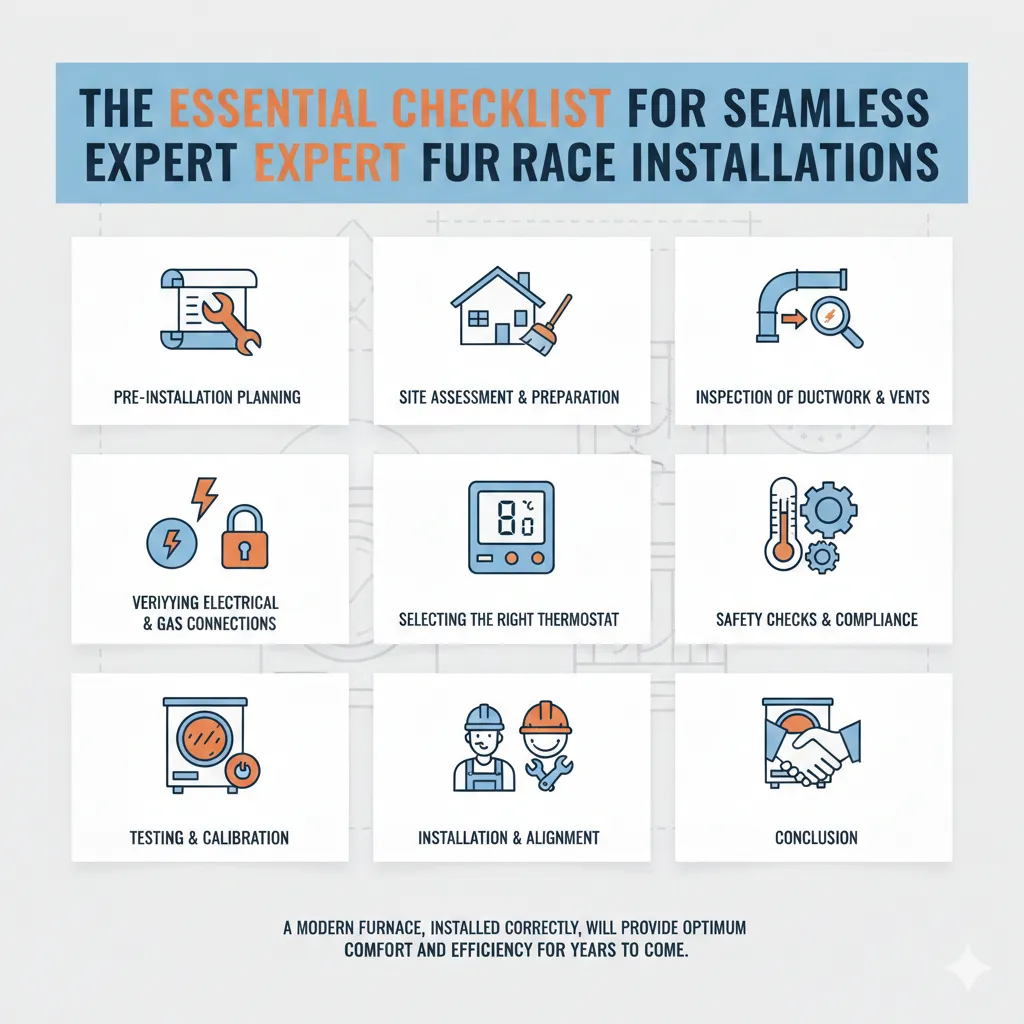
Furnace installation is a process that can be quite complex, but if done properly and carefully, it can turn into a smooth operation. A properly crafted checklist helps homeowners as well as professionals in completing hassle-free installations on the first go while minimizing future problems. If everyone involved is aware of the vital steps in this process, comfort and lasting heating system performance can be achieved.
Pre-Installation Planning
Any great central OH furnace installations start by defining goals. Understand your needs and choose the right heating appliance suitable for your property. That includes the size of the building, its insulation, and current ducting. Correct calculations save energy and provide constant warmth. By pre-assembling tools, safety gear, and installation materials, the process will run smoothly and be less prone to delays caused by unforeseen circumstances.
Site Assessment and Preparation
Inspecting the installation site also helps to expose hazards and restrictions of space. Proper ventilation and suitable clearances ensure that the system operates efficiently and safely. Clearing out the old unit and cleaning the space gives a clean slate for the new one! An organized workspace helps technicians, and a maintenance-free environment helps homeowners for better operation.
Inspection of Ductwork and Vents
Always assess ductwork before installation. Even minor air leaks, blockages, or damage can reduce system efficiency and affect indoor air quality. Tightening up the ductwork, either by duct sealing or duct insulation, can make a significant difference in both airflow and efficiency. This also helps keep dust from circulating back through the house when the system is on. Pathways must not be blocked for warm air to reach, so the work of the furnace remains unhindered!
Verifying Electrical and Gas Connections
Checking power sources and gas lines may avoid a hazard. Electrical circuits should meet the unit specifications and should not be corroded or damaged, so technicians will have to verify them. Check gas lines for leaks and secure fittings. Before commencing work, turn the power and gas off. Ensuring the safety of all involved in the installation is vital; therefore, all safety protocols should be closely adhered to for a successful, all-around installation.
Selecting the Right Thermostat
A compatible thermostat is going to bring out the best the furnace has to offer. By pairing the control appliance with the heating system, it can control the temperature properly. Models with programmable choices save energy, and smart controls make it more convenient. It is important to install this somewhere where it will have accurate readings, so that you are comfortable in your living spaces. Simple instructions make it easy for homeowners to use the controls.
Installation and Alignment
Properly positioning the furnace allows for increased efficiency and a longer life for your equipment. It creates vibrations, and increasing vibrations cause greater wear. Which is why it is important to level it and keep it in one place. Working connections to ductwork, exhaust pipes, and drains are also essential to ensure smooth function. Mounting and wiring must be performed according to the manufacturer’s guidelines. Checking all fasteners and seals ensures no air leaks, as air leaks can cause system malfunction.
Testing and Calibration
Testing the installation by running some tests is important. By powering the system, the technician is then able to watch for any issues while the start-up is happening. They check if there are any odd sounds or odors. They would then slide the pieces off and take measurements of both the airflow and temperature, which helps to determine whether or not it was working properly. That performance can be tweaked using burner settings and fan speeds. They ensure that from day one, the furnace runs efficiently and safely.
Safety Checks and Compliance
Compliance with local codes, along with safety requirements, safeguards against legal affairs or operational matters. Documentation of installation steps and component specifications might be required for inspectors. Carbon monoxide detectors must be tested and placed close to where people sleep. Discussing emergency shut-off instructions with the homeowners serves as an extra precaution. During this process, safety continues to be one of the top priorities.
Conclusion
A checklist that lays out the details ensures furnace installations are easy for both parties and provides optimum comfort and safety. By following each step carefully, the chance for an error or failure of the system is greatly reduced. Preparation, organization, and well-communicated expectations work in favor of both homeowners and technicians. If installed correctly, a modern furnace will work efficiently year after year.