
The Role of Power Wires in Home and Car Audio Systems Explained
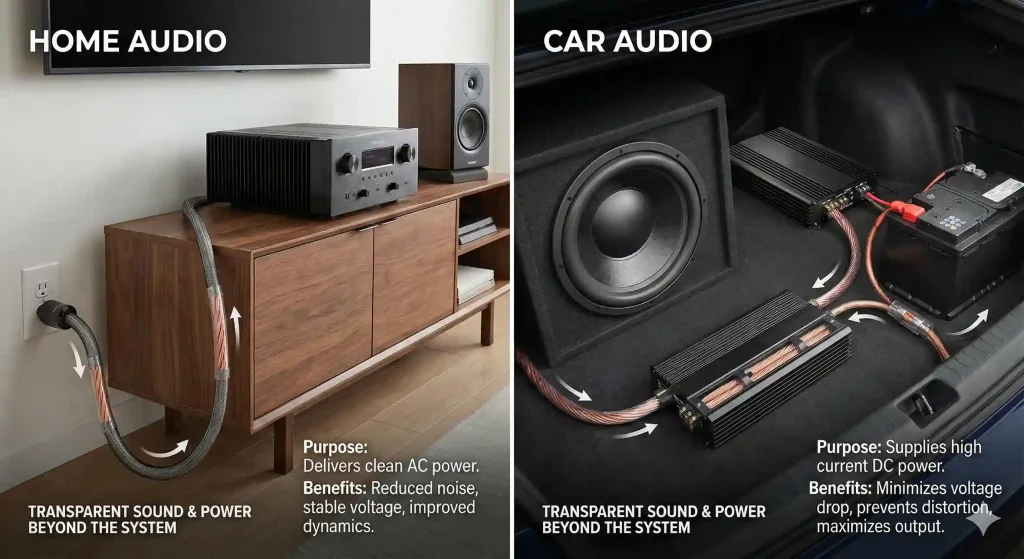
A full explanation of how power wires work in the home and car audio systems used by users to provide more transparent sound and power beyond the systems. While it may seem to many that good audio comes purely from speakers or amplifiers, you may be surprised to know that power cables carry quite a bit of weight in determining audio quality. However, wiring is a significant factor in preventing it from sounding good (and working well). In this post, we discuss the purpose of power wires, their benefits for audio, and how to select them.
What Are Power Wires?
Power wires transfer electrical energy from the source to audio devices. These are the cables that can be found in home and vehicle audio systems, ensuring that the amplifier and other components receive a constant current. As a result, it facilitates power transfer, which enhances signal output stability, minimizes interruptions, and provides a better listening experience. A strong wire stops voltage drops that would otherwise trigger distortion when you play it.
Lack of a good quality forecast in Power Cables
Power cables play a vital role in ensuring audio devices perform correctly and safely; therefore, it is advisable to use high-quality power wires. Heat is released, energy is wasted, and in the most extreme cases, shorts can occur, all of which jeopardize the life of the equipment. High-quality wires also utilize thick conductors and robust insulation to minimize resistance and shield against electrical noise. Quality cables will not only ensure sound clarity is at its best but will also protect the rest of the system from potentially hazardous scenarios.
Choosing the Right Gauge
Cell: The gauge or thickness of a power wire determines its ability to carry a given amount of current without overheating. Thicker wires can handle a higher power load, which is crucial for high-output amplifiers or subwoofers. Thinner cables may be enough for smaller looms, but thicker wiring is required for stiffer systems. Choosing the correct gauge eliminates voltage drops while maintaining sound quality, ensuring consistent sound performance at all volumes.
Material Matters for Conductivity
Copper has been the most common material for power lines because it is a good conductor of electricity. Aluminum, which is lighter, cheaper, and less effective at conducting current than copper, is sometimes used in place of copper in wires. The material determines not only how they perform, but also how long they last, and the flexibility of the material itself. Ideal power delivery and long-term reliability are achieved when the right conductor is selected.
Insulation and Safety
Wires that carry electricity require strong insulation to prevent shorts and protect the user from electric shock. Due to its resistance to heat, moisture, and abrasion, higher-grade insulation prolongs the life of the wire. Whether at home or in your vehicle, safety must always be your top priority. Ideal isolation helps maintain the uninterrupted functioning of audio experiences, even in extreme scenarios.
Installation Best Practices
The proper installation of power wires reduces the chances of parts loss. The key purpose of separating wires from signal cables is to avoid audio interference as much as possible. Ensuring tight terminals to secure connections gives a precise current flow. No sharp bends or pinched wires means no future issues and a sustainable, reliable performance of your system.
Impact on Audio Quality
Power wires have an impact on sound quality, as they ensure an even distribution of energy to amplifiers and speakers. Changes in current can generate noise or distortion. When the wiring is done right, the users receive crisper highs, a deeper bass, and mid-tones that do not feel unbalanced. This separation becomes more pronounced in higher-powered configurations, where every nuance matters. Good wiring ensures the signal remains intact as it travels through the audio chain, resulting in more pleasant listening experiences.
Conclusion
Although they might not be the most visually appealing component of your house or vehicle’s audio system, power wires are unquestionably the foundation of performance. When they’re chosen correctly—based on gauge, quality, and system demands—your speakers sound cleaner, your amps operate smoother, and your whole audio system becomes safer and more reliable.